





Sermon delivered on Sunday, December 30, 2018
“That man over there says that women need to be helped into carriages, and lifted over ditches, and to have the best place everywhere. Nobody ever helps me into carriages, or over mud-puddles, or gives me any best place! And ain’t I a woman? Look at me! Look at my arm! I have ploughed and planted, and gathered into barns, and no man could head me! And ain’t I a woman? I could work as much and eat as much as a man – when I could get it – and bear the lash as well! And ain’t I a woman? I have borne [five] children, and seen [one] sold off to slavery, and when I cried out with my mother’s grief, none but Jesus heard me! And ain’t I a woman? . . .
Then that little man in black there, he says women can’t have as much rights as men, ’cause Christ wasn’t a woman! Where did your Christ come from? Where did your Christ come from? From God and a woman! Man had nothing to do with Him.
If the first woman God ever made was strong enough to turn the world upside down all alone, these women together ought to be able to turn it back, and get it right side up again! And now they is asking to do it, the men better let them.” – Sojourner Truth
These are the words of Sojourner Truth who was born into slavery as Isabella Baumfree in 1797, and by the time her work on the earth was complete she became universally recognized as one of the most powerful advocates for human rights in the nineteenth century.
Three years after Seneca Falls, twelve years before the Emancipation, seventy years before the 19th Amendment, and one hundred and sixty years before a Pink Hats, Black Lives Matter and #Metoo movement – Sojourner Truth was a strong advocate for women’s rights and abolitionist efforts in the United States. And in 1851, at the Women’s Rights Convention in Akron, Ohio, her prolific proclamation of poise and prophetic power became recognized as “one of the most famous abolitionist and women’s rights speeches [ever] in American history.”
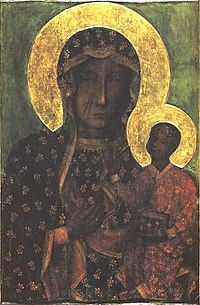
In the introduction to her book Ain’t I A Womanist, Too?: Third Wave Womanist Religious Thought, Rev. Dr. Monica Coleman, Professor of Constructive Theology and African American Religions at Claremont School of Theology, details Sojourner’s prophetic truth as a poignant, prophetic, and priestly critique of the “default understandings of womanhood” that have strongly and detrimentally harmed women and the world in the 167 years since her speech and the centuries that predate it (pg. 1).
First, Rev. Dr. Coleman describes Sojourner Truth’s speech as a powerful critique and departure from the “Victorian standards of piety, purity, submission, and domesticity” rooted in Western, white, racist, and classist ideals which disparaged women of color not only in the past but also in the present. Ideals that undergird racist narratives of black women as Mammies, Jezebel’s, harlots, and welfare queens who are poised and proper to parent other people’s children, but are criminalized and deemed irresponsible when it comes to their fitness in raising their own. Ideals at the source of black women’s terror and fear due to centuries of violence, rape, murder, and forced separation from their families – fathers, husbands, brothers, and children.
These are the same ideals used to justify mistreatment of women of color in immigrant communities through exploitation, sex trafficking, and low wages for domestic labor. Additionally, these are the ideals that are intertwined with the complicated narrative of birth control and contraceptives which, on the one hand, is used to deny women control of their reproductive rights; and on the other, is immersed in Margaret Sanger’s racist ideals of eugenics and sterilization that desired to use birth control and contraceptives as a means to stop the procreation of perceived inferior groups.
Second, Rev. Dr. Coleman describes Sojourner Truth’s “poignant question”: ain’t I a woman?, as a clarion call for a “redefinition [and] expansion, of what it means to be a woman,” no longer ignoring the contributions and lives of enslaved and formerly enslaved black women excluded from common perceptions of womanhood. And thirdly, the power of Sojourner’s truth – that she is in fact a woman – rests in its ability to be a “touchstone first for black women, and eventually for women of all backgrounds, to ensure that no woman, no matter how different her experiences, [no matter her age, race, sexuality, nation of origin, gender identity, or economic status] is left oppressed” (pg. 2).
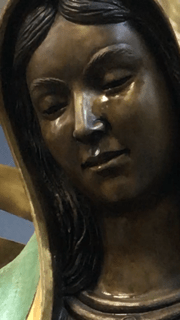
In our scripture for today in Galatians 4:4 -7, we enter in the middle of Paul’s letter to the Galatian church where he is addressing a dispute between Christian Jewish missionaries and non-Jewish Christian converts about how they are included in a new covenant relationship with God following the life and death of Jesus Christ. Interestingly, Paul’s letter to the Galatian’s carries similar themes as Sojourner Truth’s speech at the Women’s Rights Convention in that it, too, offers a poignant, prophetic, and priestly critique of the first century Jewish standards that preached God’s inaccessibility to those outside of strict observance of Mosaic law.
Like Sojourner Truth did for black and non-black women, Paul’s letter serves as a benchmark for Jews and non-Jewish alike by “broaden[ing] the boundaries of race, class and [religious practice] in the interest of inclusion, freedom and power for all people” (Coleman, 25). Moreover, Paul’s letter expresses a philosophy which expands what it means to be included in the Christian family of faith by introducing the radical notion that God’s promises are made accessible to all people not because of our works; rather, because we have been “justified by our faith” through belief in Jesus Christ (Gal. 3:24).
To be justified by faith means that our righteousness and Godliness has been ascribed or credited to us despite our imperfections and shortcomings; hence, redemption, reception of the Holy Spirit, entrance into God’s kingdom, and inclusion in God’s promises is granted through grace and our faith in the life of Jesus (Gal. 3:15-17). Thus, the message of the letter of Galatians challenges us in our contemporary context to remember as Rev. Dr. Ruthanna Hooke writes:
“First, through Jesus Christ, we have been offered a release from social barriers and hierarchies based on race, class, gender, and sexual orientation . . . Two, that the saving grace of Christ is available to all, even to those outside our habitual communal boundaries. Three, that people whose identities are consistent with God’s purposes are to be [fully] honored and [fully] incorporated in the Christian community. Finally, we are challenged to examine the ways we are enslaved to the ‘powers of this age’ that enslave us to our possessions, patterns of overwork, addictions, overconsumption, and to ways of life that exploit others [and withhold justice]” (Preaching God’s Transforming Justice: A Lectionary Commentary, 2011).
Paul’s overarching message to the church in Galatia is that through Jesus Christ, humanity has been credited redemption and liberation from the corrupting “powers of this age” that estrange our relationships, harm our communities, exploit the most vulnerable, and neglect those in need. Additionally, in light of our celebration of Christmas, Paul’s message offers good news that through the birth, life, and ministry of Jesus all of humanity has been liberated to love and be reconciled with each other so that all may achieve oneness in Christ and kinship through our relation to God in heaven.
Yet, when we read the letter to the Galatians more closely in chapter 4, verses 4 through 7, we see that the redemptive power of Jesus did not, and could not, have happened through Jesus alone! However, in a scriptural detail that is both minimized and often overlooked, there is an important inclusion that is so minuscule that many may mistake it as insignificant in the tale of humanity’s redemption and liberation.
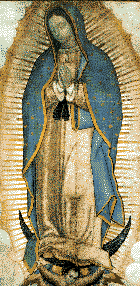
It is a detail that is minimized and overlooked by both scholars and preachers alike. And similar to the way women are treated in a patriarchal society, this detail is treated as something that can be thrown away or marginalized even though it houses one of the most important theological nuggets pertaining to Christian faith.
It is what Sojourner Truth had in her heart when she asked a little man dressed in black who would deny her equality because of her gender: “where did your Christ come from?” For, as the scripture says in Galatians 4:4-5, “it was in the fullness of time that God sent God’s own Son, born of a woman” – a woman of color; a teenage woman of color who got pregnant unexpectedly; a teenage woman who was pregnant out of wedlock; a woman with whom there was debate/confusion over the identity of her child’s father; a woman who decided to exercise agency over her own body and reproduction – a woman, named Mary, who gave birth to Jesus and who subsequently became intricate to the Christmas story of the coming of light and salvation for the world.
Unfortunately, not much is said about Mary in the letter to the Galatians, but from what we can learn from the accounts of her in the Gospels, we know that Mary was a woman like any other woman who was committed to the “survival and wholeness of her people” (Alice Walker, from her definition of womanist).
Like many single parents, Mary was a mother like any other mother who had to find a way to support her family and nurture her children financially, physically, emotionally, and spiritually (Mark 6:3).
Mary was a woman like any other woman who had to balance being a rock and a refuge for her family while still struggling to maintain her self-esteem and self-confidence.
Mary was a mother like any other mother trying to balance the stress of dealing with frustrating and ungrateful children while making sure they needed and wanted for nothing in life.
As a mother of color – like many mothers of color – Mary could not stop to weep and could not groan when the work got tough or when the stress of her life became too much to bear. Mary was a soldier. Mary was a fighter and a survivor. And Mary was a woman like many other women who was not always dealt the best hand in life but never quit “making a way out of no way” (Monica Coleman).
Mary was a woman who drew strength from her community of friends and her close, intimate relationship. And Mary was a mother who drew strength from her faith in God. For, like many women, living as a marginalized and disenfranchised group, as Womanist theologian Delores Williams states, Mary had as her helpmate “not [a man] but [her faith] . . . [and her faith serviced both her] psychological and emotional [support]” (Sisters in the Wilderness).
In other words, Mary had strength even though she lacked power in a patriarchal and sexist society. And Mary was a woman in the fullest sense of the word, as a person who was “interested in grown up doings. Acting grown-up. Being grown-up. Responsible. In charge. Serious.” All the while being someone who “Loves music. Loves dance. Loves the moon. Loves the Spirit. Loves love and food and roundness. Loves struggle. Loves the Folk. Loves herself. Regardless” (Alice Walker).
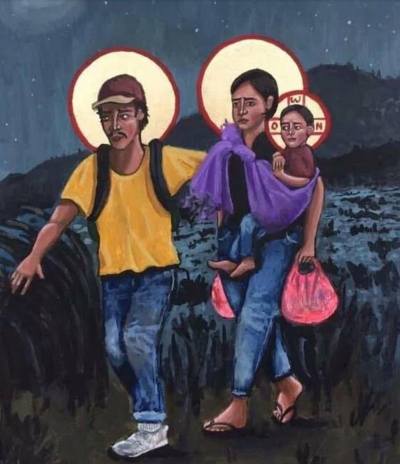
When Galatians 4:4 declares that Jesus was “born of a woman” it is not meant to only be applied to Jesus to prove His humanity and that He was in fact “a real man.” Rather, this verse asserts most significantly that Mary was a “real woman,” and as a woman Mary was not – nor was she required to be – a perfect, polished, and pristine object in the way our doctrines, icons, and default understandings of womanhood lead us to believe.
Our doctrines and traditions say about Mary that she was perfect and without sin – that she represents the pinnacle of womanhood as the second Eve, that she is the epitome of womanhood in her quiet humility. Likewise, that she was pure, sinless, and immaculately conceived so that she could one day give birth to a pure and sinless Jesus.
Moreover, for Mary to be a partner in God’s plan for redemption and liberation, our traditions say that Mary had to be pure, sinless, and undefiled in her body and in her character which is why we conflate and center her identity with her sexuality – or lack thereof, in place of centering her identity in her youth, her identity as a woman of color, her intellect, and her intrinsic God-likeness.
What helped me begin to break down these toxic and harmful ideologies was a lesson I learned in my late teens and early twenties. A lesson which empowered me to mend my strained relationship with my mother because I was finally in a place to realize and accept my mother’s humanity! This empowered me to no longer divinize her in the ways a child often “divinizes” their parent- that they can do no wrong (benevolence), that they have all the answers to life’s problems, and they know all and are always right (omnipotence), that they are always watching and have some invisible and secretive all seeing eye that always sees when I was being mischievous (omniscience).
But, when I grew to see my mother not as my mother but as a woman – as a person not in all places at all times; as a person managing her own insecurities, reeling from her own failures, holding in her heart disappointments and heartbreaks, struggling through her own life while being there supporting me in mine. As a person, like any person, who has her own hopes and dreams and who has immeasurable strength, courage, and conviction. When I grew to see my mother as a goodness but not as God, as divine but not as a Deity, then I was able to get a real sense of the full life that was within her. I was able to get an understanding and a degree of peace recognizing that she was no different than me, that she was no different than any woman, that she was no different than any person who was working and striving to do the best she could, and be the best that she could be in this life that was given to her.
Thus, as I’ve learned about my own mother, I have also learned about Mary in that Mary’s value and her contributions to the world are not located in the doctrines of her supposed purity and sinlessness. Mary’s value and God-likeness is not in her ability to manage her insecurities, fears, heartbreaks, and failures without difficulty or struggle. Nor, is Mary’s value contained in the objectification of her body.
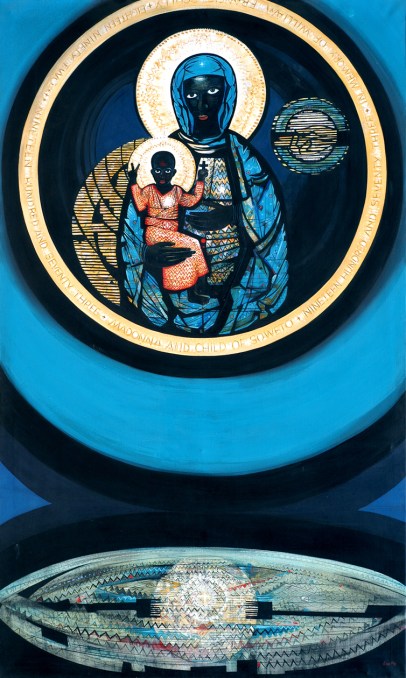
Rather, Mary was valuable, and she had disappointments. Mary was valuable, and she suffered loss. Mary was valuable, and she was poor. Mary was valuable, and she was woman of color. Mary was valuable, and she did not do things right all the time. Mary was valuable regardless of what she did or did not do with her sexuality.
Like any woman, Mary’s value came as a product of God’s love; and with her experiences, her value was cherished and celebrated by God. As Rev. Kathryn House told me once, “Mary is extraordinary in her ordinariness, her precarity, her strength and willingness to trust.” Mary is valuable, Mary is extraordinary, Mary is wonderful, Mary is “fabulous” (Emilie Townes), Mary is “phenomenal” (Maya Angelou), and Mary is blessed because Mary is a real woman – because of her humanity, and Mary was told she was “blessed and highly favored” before she ever was told she would bear a child (Luke 1:28).
Like any woman – and like every person – Mary is blessed in her identity as the Imago Dei and the image bearer of God. And God chose Mary, and God partnered with Mary because God knew that no one could birth and raise Jesus the way that Mary could!
It was Mary who poured into Him. It was Mary who nursed Him. Mary was the one who fed and clothed Him. Mary was the one who tucked Him into bed at night. Mary was the one who prayed over Him. Mary was the one who worried about Him. Mary was the one who had to discipline Him. And Mary was the one who cried tears of joy because of Him.
It was Mary who gave Him the kink in His hair and bronzeness of His skin (Rev 1:14-15). It was Mary who raised Him with a sense of justice and to care for the least of these in His midst. It was Mary who was encouraged to believe that despite living in the poor, ghetto’s of Nazareth, her Child would one day grow up to be somebody!
Well, Mary don’t you weep, because your Child did grow up to be somebody! Mary, don’t you weep, because it is you who is blessed among women and critical in God’s redemptive plan.
Mary, don’t you weep, because today we will celebrate your story. Mary, don’t you weep, because to answer Sojourner Truth’s question, we recognize that it was from you where Jesus came.
Mary, don’t you weep, because in you is the story of every man, woman, and child who ever feared their story would be forgotten and their contributions to the world discounted.
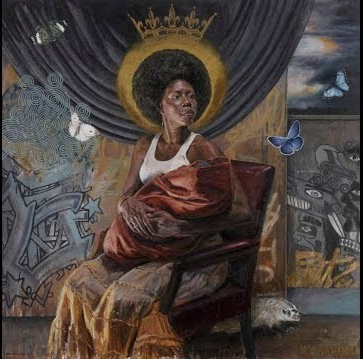
Mary, don’t you weep, because it is in you that any person who ever thought they were not good enough to possess the love of God within themselves can find encouragement.
Mary, don’t you weep, because your life is a witness to us all of God’s abounding love and saving grace.
Mary, don’t weep, because your life is a witness to God’s presence in those the world would throw away and consider incapable of bearing the divine.
Mary, don’t you weep, because through you has come our means for liberation from the boundaries and barriers that divide us. Through you has come our challenge to examine the ways we are enslaved to the ‘powers of this age’: Powers that have caused us to harm the poor, powers that have caused us to harm black and brown bodies, powers that have caused us to harm women in our political discourse, in our churches, and powers that have attempted to deny women their “measure full” of equality, fairness, love, and compassion.
And although you may want to cry sometimes, “Mary, don’t you weep, don’t you mourn, because Pharaoh’s army got drownded in the Sea;” and like Pharaoh the powers of empire, the powers of patriarchy, the powers of sexism, the powers of misogyny, the powers of racism, the powers of classism will soon get “drownded” too.
Mary, don’t you weep, because the powers that deny you healthcare, the powers that deny you equal pay, the powers that deny you agency over your body, the powers that kill your trans sisters of color, the powers that wish to neuter your sexuality, the powers that flood your communities with drugs, the powers that incarcerate your black fathers, uncles, husbands, brothers, and sons; the powers that killed your sisters Sandra Bland, Natasha McKenna, Janisha Fonville, Tanisha Anderson, Rekia Boyd, Korryn Gaines, and Aiyana Jones; the powers that prevent you from breaking the glass ceiling or place you on the edge of a glass cliff – Don’t you weep Mary, because these powers will soon be thrown down!
Mary, don’t you weep, since it is because of you, and ain’t you a woman? – that God’s redemption has come into the world, and through Your baby, Your Child, Your first-born Son, and faith in His name, we all have been justified and adopted as children and heirs of God.
O Mary, Don’t You Weep!
 My Thinking Deeper
One comment on “O Mary, Don’t You Weep!”