





In 1636, renowned Baptist minister Roger Williams was banished from the Massachusetts Bay Colony. His advocacy of religious freedom, separation of church and state, and the humane and just treatment of the indigenous Narragansett people brought him into repeated conflict with the government and religious majority of his day.
Williams, founder of the First Baptist Church in America in Providence, Rhode Island, based his religious convictions on the right of every person to freely exercise their faith according to the dictates of their own conscience. He believed that all persons should be free from persecution by their government as a result of practicing their faith – or no faith. Likewise, Williams insisted that all persons should be free from intolerance imposed by a majority religion and be true to the revelation of God most aligned with their heart and the conviction within their soul.
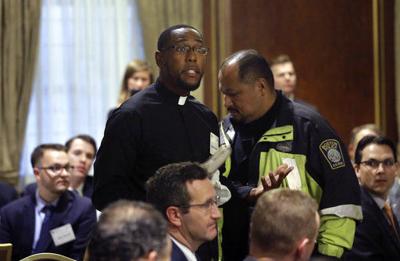
As a Baptist preacher, I am inspired by the legacy of Roger Williams. As a Christian, I am inspired by Jesus, who dissented against the political and religious leaders of His day who unashamedly legislated “unjust laws and oppressive decrees,” and who exploited the poor and the “least of these” for their own power and political gain (Isaiah 10:1).
One month ago, it was the Christian religious practice of dissent, in addition to the Baptist tradition of protecting the rights of free exercise of religion, that compelled me to stand and freely exercise my faith to disrupt Jeff Sessions at a gathering of Christian supremacy and right-wing, Christian extremism disguised as a luncheon to discuss the future of religious liberty. Additionally, I took a stand to defend the “soul freedom” of all people, and the intrinsic, God given value of all people regardless of their beliefs, race, sexuality, gender identity, or immigration status in this country.
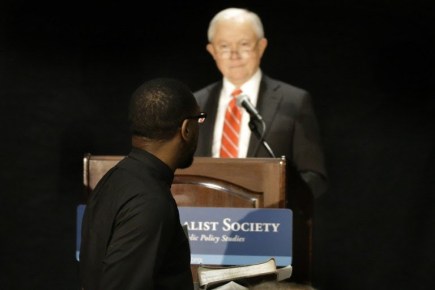
By dismantling protections afforded to asylum seekers, through supporting the separation of families as sound administration of law, and through endorsement of a “religious liberty task force” masquerading as religiously sanctioned discrimination, the Trump administration has shown itself not to be champions of true religious liberty. Nor did Jeff Sessions, former United States Attorney General, demonstrate the principles of justice, compassion, mercy, and hospitality at the core of Christian faith.
As Methodist minister Will Green reminded the country, a Christian’s free exercise of religion should be loving the stranger within our borders and extending hospitality to those in need (Matt. 25:42-43). Our religious freedom, as proposed by the founders of this nation, should be to support the free exercise of minority faith traditions and not consume them within a dominant culture of Christian normativity.
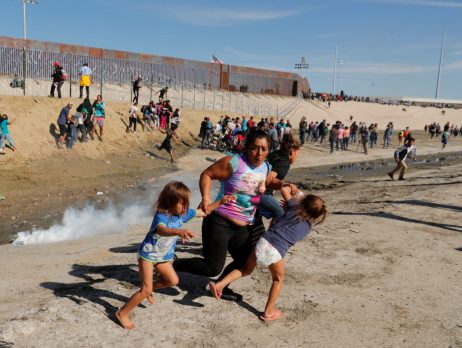
Our free exercise should not be to allow the religious dictates of our faith to work as a cover for discrimination. Nor, should our free exercise be to applaud, defend, or turn a blind eye to a woman and her children being bombarded by tear gas on the United States and Mexico border. Rather, as Christians, our free exercise of faith is working to ensure that those to whom Jesus came to minister – the poor, the sick, the hungry, the immigrant – are not trampled underfoot in our common life and public policy.
Likewise, our religious liberty should be to engage our sacred scriptures and be moved by the prophetic witness of our traditions to lead nations and governments to beat their swords into plowshares, their spears into pruning hooks, their guns into community centers, and billion-dollar increases of military spending into higher teacher pay and scholarships for education.
Most of all, as followers of Jesus, our religious liberty is grounded in the command: “‘You shall love the Lord your God with all your heart, and with all your soul, and with all your mind.’ This is the greatest and first commandment. And a second is like it: ‘You shall love your neighbor as yourself.’ On these two commandments hang all the law and the prophets” (Matthew 22:37-40).
When Christians are moved first by the command to love God and to love our neighbors as ourselves, we shall never be in conflict with any law. In the case of conflict, however, in the words of the Baptist preacher Martin Luther King, Jr.: “I believe firmly that it is necessary to have moments of dissent in order to challenge something that may be leading the nation down the wrong path.“
As we enter into this season of Advent, let us exercise our faith by calling our nation to repentance and prepare the way for our Lord.
 My Thinking Deeper
Thank you, Reverend for writing this articulate piece about Christian activism. Thank you again for the interview. I am still in awe of God for how His spirit led me to you.
The video of you standing up to Sessions: I viewed the video of you standing up to Sessions many times and each time, I knew instinctively why Session’s goons reacted to your boycott far more aggressively than your colleague. In the last few seconds of your exit, though, you began to say, “and as a black man,” but did not finish. Can I ask you what you would have said if you held their attention long enough?
LikeLike