





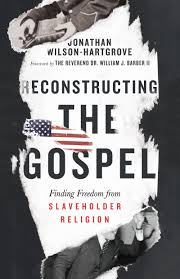
We are living in a critical time in the history of our nation as we witness such progress in areas of science, technology, and media; and simultaneously, a regression in dignified civic discourse, a resurgence in white nationalism and domestic terrorism, diminished respect for human dignity, and a return to the days when folks were allowed to go uncorrected for their faulty and harmful politics and faith. In his book Reconstructing the Gospel: Finding Freedom from Slaveholder Religion, Jonathan Wilson-Hartgrove, pastor, author, activist, and collaborator with Rev. William Barber in North Carolina, articulates that America’s original sin of slavery remains as the central influence on the contradictions in our common life.
The legacy of chattel slavery is at the heart of our nation’s fear on immigration, our ideologies of mass incarceration, reanimated out from an anxiety of “mongrelization” believed to undermine the fabric of our nation’s laws and identity. In the words of Rev. Dr. William Barber, it is the legacy of chattel slavery that “blessed all of us with a heretical ontology, asserting that God ordained racism, slavery, and systems of subjugation” which has undergirded our nation’s economy, the partisanship in our politics, the colonialism in our foreign policy, and the paternalism over women’s bodies (Wilson-Hartgrove, 3).
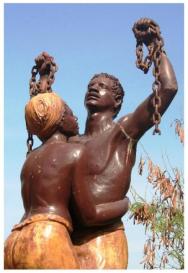
It is this “heretical ontology” – treacherous theology and profane philosophy – that is at the root of slaveholder religion. A religion that thrives on a system of dehumanization and elevates power and economy above morality and humanity. In the words of Fredrick Douglass, slaveholder religion is “corrupt . . . women-whipping, cradle-plundering, partial and hypocritical” (The Narrative of the Life of Frederick Douglass). Likewise, slaveholder religion is a practice that has “ripped the [church] in two,” – between “the Christianity of this land and the Christianity of Christ” – by which the church has been enslaved in “death dealing culture without even realizing it” (Wilson-Hartgrove, 17).
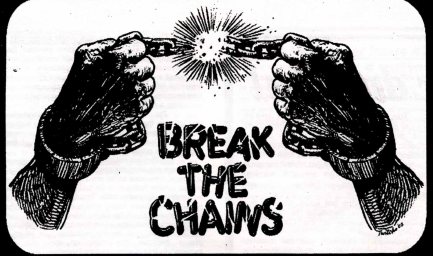
Yet, what we learn from scripture is that the power God is greater than slaveholder religion! God is greater than American racism! Greater than global sexism! Greater than the principalities and powers of white evangelicalism and a rise in Christian nationalism. The Christianity of Christ is no match for the Christianity of this land because in Christ is a God who is gracious enough, loving enough, and righteous enough to break the chains, open the doors, and shake the foundations of any practice or institution ingrained in the rituals of injustice and the sacraments of dehumanization.
In the book of Acts, the author Luke opens his book telling us of the day of Pentecost when the Spirit of God was poured out on all people, and all those who worshiped God – sons and daughters, fathers and mothers, young and old, rich and poor, slave and free – were able to speak with new tongues, were empowered with a new kind of speech, and were able to prophesy of the good and wondrous works of God so that from that day forth, anyone who called on the name of the Lord would be saved (Acts 2:17-21).
Following Pentecost, Luke tells us that the disciples went throughout the known world proclaiming the name of God who delivered the Hebrew people out from the land of Egypt and who preserved them while wandering in the wilderness for forty years. They spoke of a God who foretold of a coming Messiah who would unify all God’s people in a day of everlasting Jubilee. And it was this same God who anointed Jesus to preach “good news to the poor, to proclaim liberty to the captives and recovery of sight to the blind, to emancipate all of those who are oppressed, to preach of the arrival of the Kingdom of God and the acceptable year of the Lord’s favor” (Luke 4:16-18; Acts 13:16-41).
Thus, in Acts 16:16-34 while preaching this good news to the Gentiles in the colony of Philippi in Macedonia, Luke records how every Sabbath Paul and his partner Silas would go out of the city to the riverside to sit down and worship with the women who were praying there. While they were headed to pray, an enslaved woman, whose name we do not know, began to follow them for several days, and as they moved about the city, the Bible says, this woman would announce Paul and Silas’ presence as “servants of the Most High God,” and whose purpose it was to “proclaim the way of salvation.”
In Greek, the word for salvation is soteria which can also mean deliverance and preservation. Therefore, like generations of slaves to come both before and after her, this unnamed enslaved woman recognized in the Gospel of Jesus a message that challenged the status quo and systems of power in her nation. Doubly marginalized as a woman and as a slave, it was she who heard in Paul’s preaching that the God of Jesus Christ is on the side of the oppressed. Despite her exploited “gift of sweat and brawn,” she recognized in the Gospel of Jesus a message of deliverance and a message of hope that would forever change her circumstance (W.E.B Dubois, The Souls of Black Folk, 163).
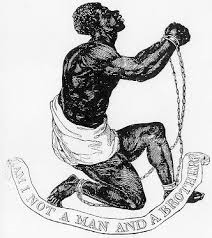
Like Nat Turner, Harriet Tubman, Frederick Douglass, anytime the enslaved hear you talking about deliverance, they hear you talking about freedom! Anytime the enslaved hear you talking about preservation they hear you talking about the powerful, potent, and transformative message that God cares for you, that God loves you, that God sees you, that God has more in store for you then your current situation in life.
She heard that God’s will then, as it is now, is that no woman, no person, be silenced, reduced to a second-class status, suffer marginalization, be ensnared in a system of dehumanization, but treated as human beings worthy of their full personhood and respect; and it is for this reason, that slaveholder religion has always tried to reduce the Bible to a select verses of scripture, because slaveholders know that the word of God is not fit to keep people docile, but God’s word has the power to give life to the lifeless and voice to the voiceless which will break the chains of slaveholder religion through a radical revolution of values and ideals.
Although the Bible says that this woman was a fortune teller possessed by a “spirit of divination,” what we cannot minimize is that this woman was still a slave – kept in indefinite bondage – who had her body and her gifts used for the profit and purpose of her slave master. So, when she follows Paul and annoys him with her persistence, the Bible says, it took Paul “many days” before he finally turned around to acknowledge her because he was complicit in slaveholder religion. He was complicit in slaveholder religion due to his attempt to ignore her, overlook her, and silence her for exercising her agency, using her voice, and claiming her humanity – allowing himself to be biased and bamboozled by the lies, stereotypes, and propaganda that has been shared about her which shaped the way he treated her in the public square.
In a post on Twitter, NY Rep. Alexandria Ocasio-Cortez made the prophetic statement:
“the reason women are critiqued for being too loud or too meek, too big or too small, too smart to be attractive or too attractive to be smart, is to belittle women out of standing up publicly. The goal is to ‘critique’ women into submission and that applies to anyone challenging power.”
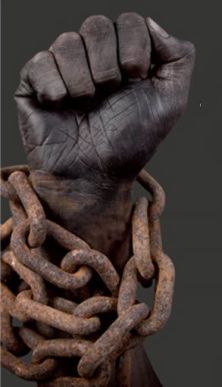 This statement well speaks of Paul because his annoyance was rooted in this woman’s audacity to be too loud and to speak for too long. In frustration and fatigue, Paul critiques this unnamed, enslaved woman because she was too public, too visible, too bossy, too boisterous, because she refused to remain silent, because she did not allow the rumors about her person to have the final say, because her life had been radicalized in such a way she decided to hold Paul accountable to honor the gospel for which he preached.
You do not have to be racist to be complicit in slaveholder religion! You do not have to actively hate black people, intentionally be sexist, or maliciously treat queer people to be complicit in slaveholder religion. But, when you choose to ignore the voice and cries of the oppressed; when you choose to participate in the defamatory rhetoric that harms marginalized people; when you assert adherence to the law of the land above the laws and commandments of God; and when your articulation of the gospel tells of a God of deliverance and liberation, but your ministry does not actively work to bring deliverance and liberation for those whose “backs are pressed against the wall” then you are complicit in slaveholder religion (Howard Thurman, Jesus and the Disinherited, 13).
Paul, despite all his good intentions, his professed faith in Jesus Christ, his desire to be a good evangelical by preaching the gospel, was complicit in the practices of slaveholder religion. Yet, unbeknownst to him, through the persistence of this unnamed, enslaved woman, Paul is delivered from his own complicity in slaveholder religion by speaking a word of liberation into this woman’s life and into the system that keeps God’s people enslaved!
However, preaching deliverance and bringing liberation is not without danger or consequence. As Paul and Silas would find out, making the spirit of divination come out, and interceding in a system of dehumanization and pain, when the slave owners realized they could no longer make money off the enslaved woman’s body, Paul and Silas were seized and taken to the marketplace to be beaten.
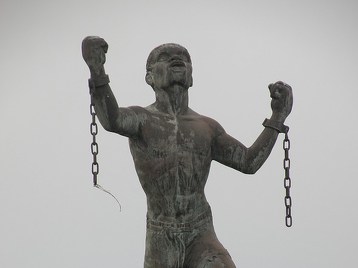 At the marketplace could be found the politicians and the pimps, the judges and dealers, the brokers and traffickers who all had their hands, money, and a vested interest in the flourishing and uninterrupted economy rooted in slaveholder religion. At the marketplace were the religious officials who advocated the heretical belief that slaves were a sub-class of humans created by God to be subjugated by others. At the marketplace was the exchange of goods and resources that financed the building of institutions and the establishment of generational wealth for families and future descendants. At the marketplace is where slaveholder religion is supported by the laws of the nation and the desires of an elite class, and it was here, after they were beaten, Paul and Silas were arrested and charged with advocating customs that were unlawful for the people in Philippi to practice or accept (16:19-24).
The customs they were accused of were Jewish customs rooted in the heritage and histories of Jewish people. And these slavers knew, like all slavers know, that the custom of the Jewish people – the custom of Abraham and Sarah, the custom of Moses, the custom of the prophets, the custom of Jesus of Nazereth, is about exodus and liberation from slavery and bondage. These slavers knew that the heritage and histories of the Jewish people are about a God of deliverance and preservation of God’s people. These Roman slavers were accusing Paul and Silas of advocating and spreading ideas of liberation and freedom because they knew the full gospel of Jesus was against the laws and practices, traditions and way of life, of a culture built on the sin of slaveholder religion.
Thus, in breaking the chains of slaveholder religion, we must learn that legality is no indicator for morality. What is deemed lawful and right by the standards of our government does not provide the standard for what is deemed right and righteous by the God of Jesus Christ.
In his letter from a Birmingham jail, in response to a letter by Alabama clergy denouncing his tactics of protests and direct action, Dr. King writes:
“There comes a time when the cup of endurance runs over, and [folks] are no longer willing to be plunged into the abyss of despair. . . . One may well ask: “How can you advocate breaking some laws and obeying others?” The answer lies in the fact that there are two types of laws: just and unjust. I would be the first to advocate obeying just laws. . . . Conversely, one has a moral responsibility to disobey unjust laws. I would agree with St. Augustine that “an unjust law is no law at all.”
In a 1967 interview, Dr. King carried this sentiment forward saying, “I believe firmly that it is necessary to have moments of dissent in order to challenge something that may be leading the nation down the wrong path.” This is precisely the impetus of the Civil Rights Movement, the suffragist movement, abolitionist movement, and the Early Church Jesus Movement because to do what is right, we must often stand against unjust laws to bring to pass the custom of Jesus which is Liberation of God’s people.

Yet, just like Dr. King, standing against unjust laws is not without consequences, and it will likely end with you in jail, or worse. But, as the Bible says, it was while Paul and Silas were in jail, they were praying, singing hymns, and preaching about the way of salvation when an earthquake came and shook the foundation – the bedrock, the infrastructure, the nuts and bolts – of the prison, and everyone trapped and contained within the prison were loosed (16:25-30).
The practice of slaveholder religion is what all of us have at one time or another been incarcerated by, enslaved to, and agents on behalf of. But, the good news is that when we overcome our complicity, and learn that the law is no indicator for morality, then God breaks the chains of slaveholder religion because the God of Jesus Christ is a Liberator, God is a Deliverer, God is a Resister, God is a Healer, and God has the power to busts open the doors and breaks every chain that divides God’s people, and holds God’s children captive from experiencing the fullness of the life that God has promised for us to have. The gospel of Jesus is greater than the power exercised in the world, and anyone who would but believe will be saved – will be justified and made free.


Amen. This was a powerful message.
LikeLiked by 1 person